
UPPER DELAWARE RIVER, NY and PA — The Upper Delaware Council (UDC) discussed allyship with indigenous communities, a proposed trail near railroads from Hancock to Port Jervis and the defunding of a …
Stay informed about your community and support local independent journalism.
Subscribe to The River Reporter today. click here
This item is available in full to subscribers.
Please log in to continue |
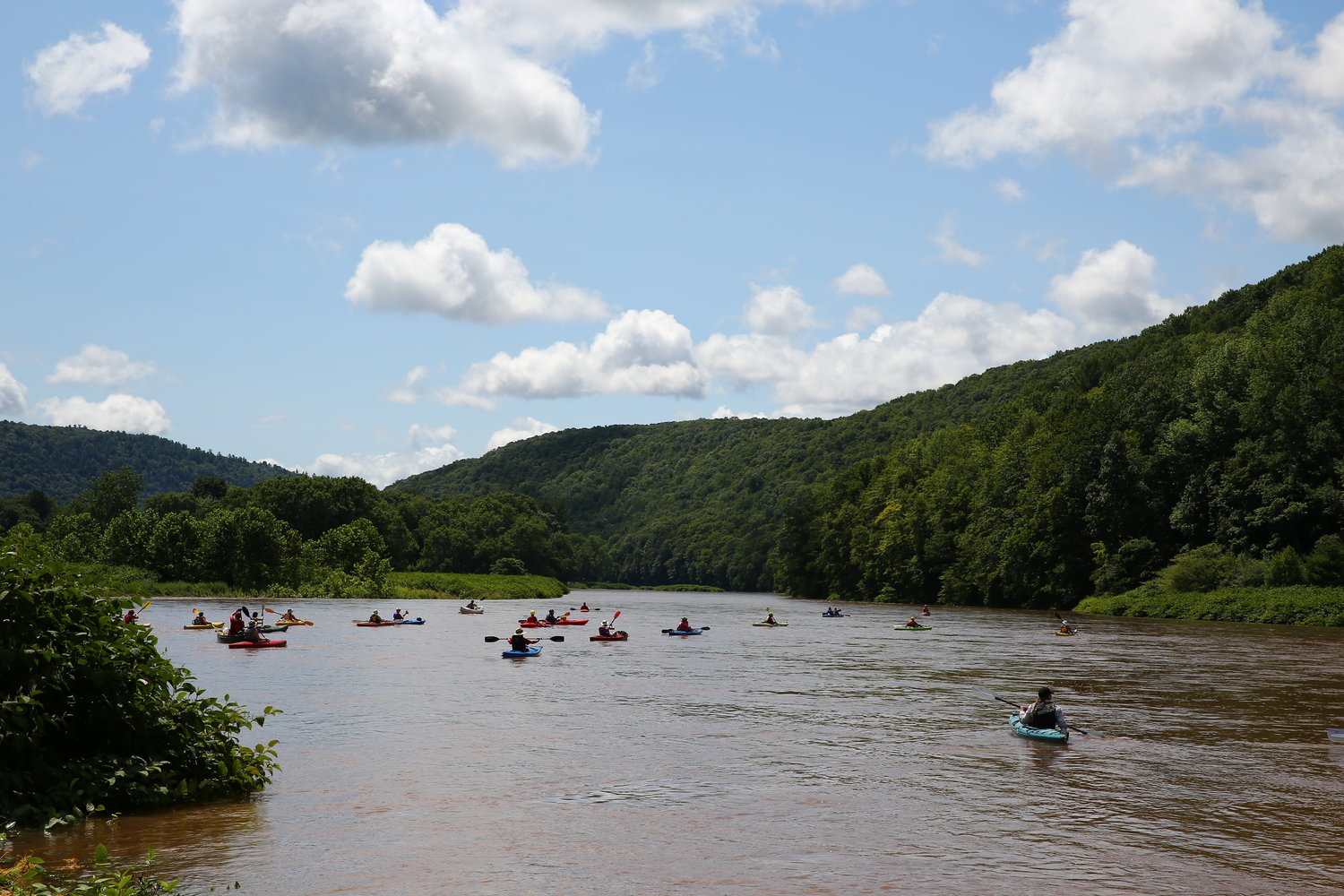
UPPER DELAWARE RIVER, NY and PA — The Upper Delaware Council (UDC) discussed allyship with indigenous communities, a proposed trail near railroads from Hancock to Port Jervis and the defunding of a river gage in Barryville during its regularly scheduled meeting on September 3.
Allyship
Enx Eeden, a delegate from the Lenape nation, gave a presentation on creating healthy allyships with native people.
Eeden started his presentation by giving a bit of background on his clan. He explained that there are over 500 clans in the U.S, which is also referred to by tribes as Turtle Island. Eeden’s clan, the Lenape, are the turtle clan focused around the Delaware River.
”The Delaware River itself is a bit of our HQ,” he said, adding that the Lenape are known to be a bit of a mediator tribe, in part due to the proximity to the river.
Eeden added that allying with the native people is important, as they have “a highway of knowledge that is embodied by the river.” Some of that knowledge includes what native plants can be used to stop erosion, which fish populations may be getting low and more, he said.
To be a good ally, one must “understand where you end and where others begin,” according to Eeden.
Avoiding making unattainable promises is also a good rule of thumb, he added.
“Everybody has wisdom to share. Positions and titles don’t necessarily create that coming together that we could otherwise have,” he said.
The Gobi desert was an example Eeden used of positive change that could be made as a result of healthy allyship and listening to nature.
The desert expanded in the ‘80s, causing dust storms for cities that were thousands of miles away, according to Eeden. Plants were dying, and the air was unhealthy for communities living there. As a result, a project was launched that introduced a native horse, Przewalski’s horse, back into the wild.
The introduction was slow and carefully planned, but the horses ultimately helped the desert retain water better due to the pounding of their hooves.
”Plant species that hadn’t been seen in 20 years started popping up in places they were not expected to be.” Eeden said.
This sort of positive environmental change is why allyship is so important, he summarized.
”If we dedicate ourselves to learning, then we can have these spaces where all different perspectives begin to mesh together,” he said.
Upper Delaware Rail-with-Trail
In a letter addressed to the UDC, former Hancock supervisor Samuel Rowe Jr. asked the council to participate in a preliminary meeting to discuss a proposed trail site from Hancock to Port Jervis, mostly following the Upper Delaware River and the active Southern Tier railroad.
“I believe a safe, well-planned trail connection linking the Upper Delaware communities could become a significant recreation, tourism, transportation and economic-development asset for the entire river valley.” the letter reads.
Rowe Jr. also acknowledged that the railroad corridor had a second track that has since been removed that may be of interest as a potential path for the trail, but said he does not assume that Southern Tier would give permission for that.
“The railroad—that’s not gonna happen in any shape or manner,” Ginny Dudko, Deerpark representative, said about the potential for cooperation from the currently active railway.
Cochecton representative Larry Richardson said that the project was very ambitious, and that it should be presented to the UDC’s Water Use/Resource Management committee.
As council members agreed on the ambition of the project, Laurie Ramie, executive director of the UDC, added that according to the National Parks Service (NPS) 1986 River Management Plan, one of the parks department’s responsibilities was to create a trail network near the Upper Delaware River. That same management plan is what established the UDC.
“There’s very much a precedent for this, and we just [have] never done it until now,” Ramie said.
Ramie added that Rowe Jr. told her that he has already contacted 60 different municipalities and agencies from Hancock to Port Jervis. Ramie said Rowe Jr. has heard back from the Delaware County Economic Development Department, which is looking into a “$25,000 to $50,000 grant with a due date of November 1st.”
“He doesn’t want this to be a one-man project. It is meant to be shared by others and just be a discussion at this point,” said Ramie.
Barryville gage
According to a memo sent by the UDC, a gage in Barryville will no longer be funded by the NPS after two years.
The gage measures how the flow from the Lackwaxen River impacts the Delaware River, and is the only monitoring station between the Lackawaxen and Matamoras, according to the memo.
The gage will still be there and measure data, but starting September 30, no discharge data measuring cubic feet per second of the river will be collected, Ramie explained.
It will cost an estimated $10,000 to start collecting the data from the gage again.
”I think what costs so much money for this one particular measurement is the hydraulic modeling of how the water is actually flowing could change,” NPS Superintendent of the Upper Delaware Scenic and Recreational
River Lindsey Kurnath said. “So USGS (U.S Geological Survey) sends someone out to actually take a physical measurement x number of times a year to make sure the model is still accurate.”
Ramie said she has not heard any responses in terms of funding for the gage yet after hosting public presentations in August 2024 with USGS Hydrologist Guy Foster and sending correspondance to local municipalities.
The next UDC meeting will be on October 1.


Comments
No comments on this item Please log in to comment by clicking here