
News of the near-demise of wind energy in the U.S. turns out to be seriously premature, but not for lack of trying. The Trump administration has made no secret of its disdain for renewable energy in …
Stay informed about your community and support local independent journalism.
Subscribe to The River Reporter today. click here
This item is available in full to subscribers.
Please log in to continue |
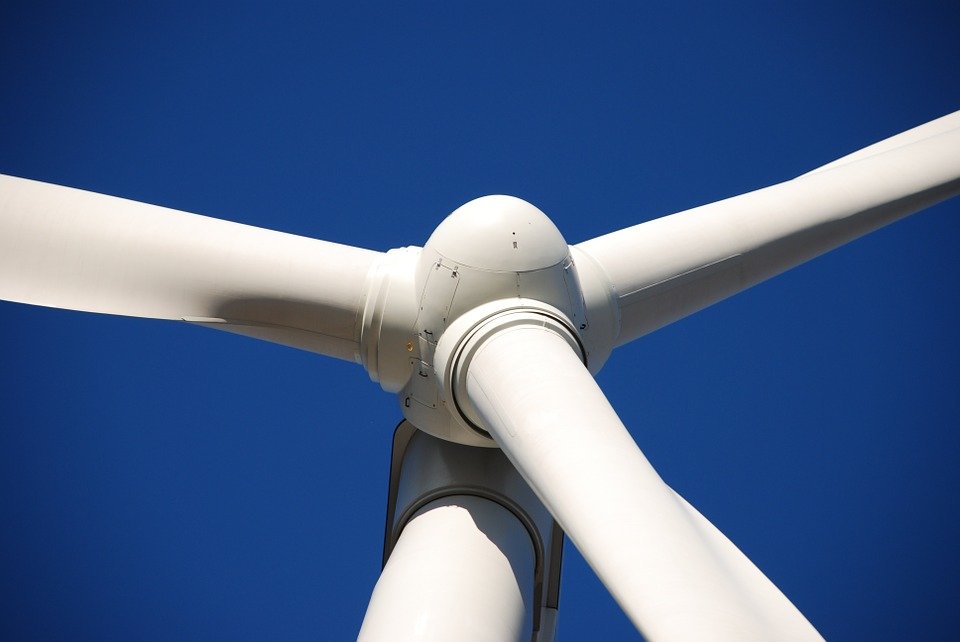
News of the near-demise of wind energy in the U.S. turns out to be seriously premature, but not for lack of trying. The Trump administration has made no secret of its disdain for renewable energy in general and wind power in particular, and it has gone to dramatic lengths to thwart wind projects.
Shortly after Mr. Trump’s second inauguration in 2025, the administration issued a presidential memorandum freezing all federal approvals for wind projects for an indefinite period. Federal agencies stopped processing applications, and the action prompted a lawsuit led by New York State Attorney General Letitia James and joined by 16 other states and the District of Columbia. In December 2025, the states won the first round, and the judge characterized the freeze as “arbitrary, capricious and unlawful.” The federal government filed an appeal, but withdrew it just last month, and the case was duly dismissed by the U.S. Court of Appeals for the First Circuit.
Earlier last month, in a separate case, a federal judge restored an energy tax-credit pathway the administration had tried to make less accessible for wind and solar projects. Two significant wins for clean power.
Of course, there are lots of other ways to make life difficult for renewable energy developers, such as requiring repeated reviews of already approved projects, cancelling federal loan guarantees, or creating arbitrary construction delays. In the spring of 2025, the administration halted an offshore wind project in New York, saying the permits “had been rushed” under the Biden administration, despite the fact that the first Trump administration had awarded the lease and the second had overseen final federal approval. The project was allowed to resume one month later—a delay just long enough to create costly disruptions in a complicated construction schedule.
Last August, a second project, off the coast of Rhode Island, was stopped despite the fact that construction was 80 percent complete. The Bureau of Ocean Energy Management had ordered further federal review related to unspecified “national security interests.” Once again, a federal judge ruled that the project could resume.
Then, just before Christmas 2025, the Department of the Interior halted construction on five major projects off the East Coast, claiming that they posed national security risks. All five projects resumed after federal courts struck down the freeze order, saying the federal government had failed to prove its national security claims.
That loss seems to have inspired the latest strategy: why not simply pay developers not to build their projects, and coerce them into building fossil fuel facilities instead? The administration has negotiated four such deals. The first was a $1 billion dollar buy-back of wind leases from France’s TotalEnergies, on condition that they focus on a liquefied natural gas plant in Texas and other fossil fuel projects. Duke Energy received $129 million to abandon wind projects in New York and North Carolina, and the Chicago-based Invenergy received $765 million to cancel projects in Maine and California. According to the Associated Press, the administration has spent $2.6 billion on these buy-back deals. The affected states, including New York and Connecticut, are suing.
Despite the administration’s increasingly desperate tactics, clean energy seems to be thriving, according to the Environmental Defense Fund’s State of Clean Power report for the first quarter of 2026. Developed in collaboration with the research firm Atlas Public Policy, the report details existing renewable energy capacity and projected growth based on projects that are already in development or under construction. According to the Q1 2026 report, clean power (solar, battery storage, wind, geothermal, and both conventional and pumped storage hydroelectric) is ramping up, with 222 gigawatts (GW) currently planned or under construction. Developers have announced plans to invest an estimated $377 billion over the next five years.
With 471 GW of clean power currently online, the U.S. added a record 51.6 GW in 2025, comparable to the output of “25 Hoover Dams.” More than 8 GW of clean energy was added just in the first quarter of 2026. While solar and batteries dominate the field, onshore wind projects are projected to rebound, with 11.7 GW anticipated to come online in 2026, compared to a peak of 14.9 GW in 2024. But not without a fight: onshore wind development has been brought to a standstill by the U.S. Department of Defense, which is required to review wind projects as part of the formal review by the Federal Aviation Administration.
In May, the Pentagon froze all reviews, effectively imposing an indefinite moratorium on more than 250 wind projects totaling 30 GW of power. Some developers suspect that the slow-walking is timed to prevent their projects from meeting a July 4 deadline to qualify for tax credits that are set to expire. Nine renewable energy trade associations, including Alliance for Clean Energy New York, filed suit on May 31. The toxic two-step continues.


Comments
No comments on this item Please log in to comment by clicking here